

Blog: It’s Not All About Fiction
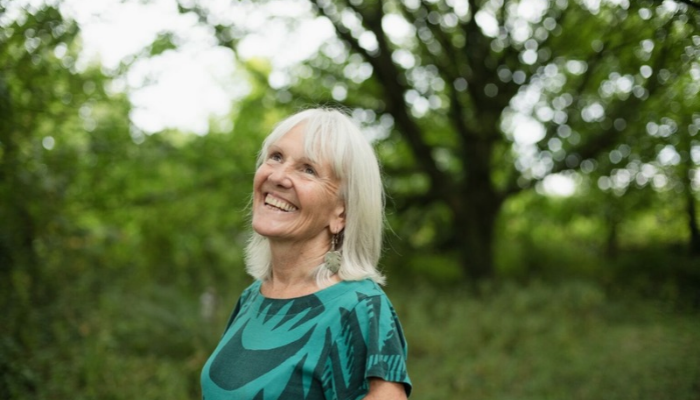
To mark Non-Fiction November, the Children’s Laureate Wales, Nicola Davies, has written a piece championing the form, which is aimed at those who purchase and source books for the young people in their lives.
Non-Fiction November is almost over for another year, so just before it vanishes over the lip of the calendar, I wanted to say a few things to champion non fiction books.
First of all…. what ARE non-fiction books? They come in as many shapes and sizes as fiction, in fact sometimes they may walk the wobbly line between the two types. But if you think that non-fiction books are just fact books, think again. Yes, indeed, fact books – books that deliver concentrated bites of information, often with very specific illustrations – are non-fiction, but non-fiction can be narrative (information packaged into a story) or even poetic.
What non-fiction does is to give you an enjoyable read and tell you stuff about the real world. Children’s non-fiction is particularly wonderful at the moment ands covers every subject you can think of in the most innovative ways, with great writing and fabulous illustration.
We have google, why do we need non-fiction?
A google search isn’t curated and it it isn’t peer reviewed. A children’s non-fiction book is written with a specific age group in mind, to communicate high quality information in a way kids will understand and engage with. Non-fiction books also use images that work with text in a powerful way that adds to the information content. Narrative non-fiction and poetry deliver information wrapped in text that also engages children’s emotions, reinforcing the learning. What’s more, some non-fiction texts are very funny.
So there is something in children’s non-fiction for every age and taste.
Aren’t fictional stories more interesting ?
To some kids yes, but think about how interested we are when a film our book advertises itself as being ‘based on real life’. The word story doesn’t mean just things that are made up. There are many stories from the real world. Some children will always find fact books more interesting than any narrative; research shows that what motivates young children to engage with books is CURIOSITY, finding out about the world. In education grown ups talk a lot about how children learn to read, but children wont learn to read unless they are motivated to do so wanting to find out about the world is a powerful motivator for engagement with books and reading.
Why read non-fiction to my children?
I think many parents – especially if they haven’t been read to themselves, get performance anxiety about reading stories. They feel pressure to find different voices for all the dwarves, or remember what the dragon sounded like last week. For some parents the pressure to perform when reading fiction can be daunting. But when you read a non-fiction book you and your child are discovering something together. It’s not you reading the book to a quietly attentive kid, it’s a conversation about the information delivered in the text AND THE PICTURES.
I was recently asked by a dyslexic mum who found reading very challenging, how she could ‘read’ to her children. For her, the short bites of text in fact books were manageable and when I told her that simply turning the pages and talking about the illustrations was as good as reading, she beamed. Once again research supports this kind of reading and shows that it’s a great way for children to learn what questions to ask and how to ask them; a key skill and a developmental milestone.
Where and how to start reading non-fiction to your children
You know your children so you’ll find the best approach but here are a few ideas and resources to get you going
Curiosity is the start
If you child asks a question about almost anything, use that as your starting point. Even if you know the answer, your response could be ‘lets’ find out’. There will almost certainly be a non-fiction text that will give you some answers and spark yet more questions. Let your kids lead the investigation and remember that one of the most empowering and revelatory things you can say to your child is ‘I don’t know but we can find out’
Sometimes, introducing a new subject to a child is best done with narrative non-fiction – there are lots of narrative non-fiction picture books to get you started on every subject from dinosaurs to cake mixture or the history of string. Then you can look for more detailed texts to gather more information in a targeted way. For some kids though, narrative is just an unnecessary complication and they just want facts. And that’s fine…just make sure you talk about what you’re learning together and encourage questioning and interrogation of text and pictures.
Never too old for pictures
Picture books are your friend. No one is ever too old for a picture book and I guarantee you will learn something from non-fiction picture books that you did not know or have a subject explained in a way that gives you a new grasp on it. My agent said she never really understood how fossil fuels, photosynthesis and climate change were linked before reading my picture book, Green.
Poetry is mostly observation of the world and how it works and therefore is mostly non-fiction. Poetry is a very broad church indeed – search and experiment and you will find voices that you and your children love.
Where to find non-fiction
If you have a good library start there. If you don’t, and you can find the time, you can club together with other parents to buy books to share.
The Centre for Learning in Primary Education (not the catchiest title but a fab organisation) have great booklists and suggestions on their website look for CORE BOOKS and go to the Information books bit
Booktrust is an amazing charity dedicated to children and books they have great non fiction titles listed for each age group on their website.
The Royal Society have a children’s science book prize every year. Check out the shortlists and you find really top titles.
The ClIppa Award for young people’s poetry is also a good source of suggestions
There are fantastic children’s book shops with incredibly knowledgeable staff but they are thinly distributed. Luckily, we now have this internet thingy so you can find them and the books they sell, online. The advantage of an indie specialist children’s bookshop is that you won’t be overwhelmed, as you will be on Amazon or in a Waterstones, and these kind of shops are run by people who really KNOW and LOVE children’s books.
For example, GRIFFEN BOOKS in Penarth has a great children’s non fiction section.
Publishers websites also will have non-fiction titles listed. Walker Books have great narrative non fiction (yes I am biased) Magic Cat are new and have a wonderful list. Post Wave are new and great for very little kids but as soon as you begin to search you’ll find your favourites. Our very own Graffeg here in Wales has wonderful illustrated non fiction for all ages.
One note of warning: beware the discounted book. There are lots of not very good non-fiction books and they get sold off in batches on the cheap. It is better to have a really great book that your kid will love and read over and over than a pile of things that just don’t engage them.
Make the slogan of your family ‘learn something new every day’ and bring National Year of reading to a splendid close with a November and December of non-fiction reading