

Introduction
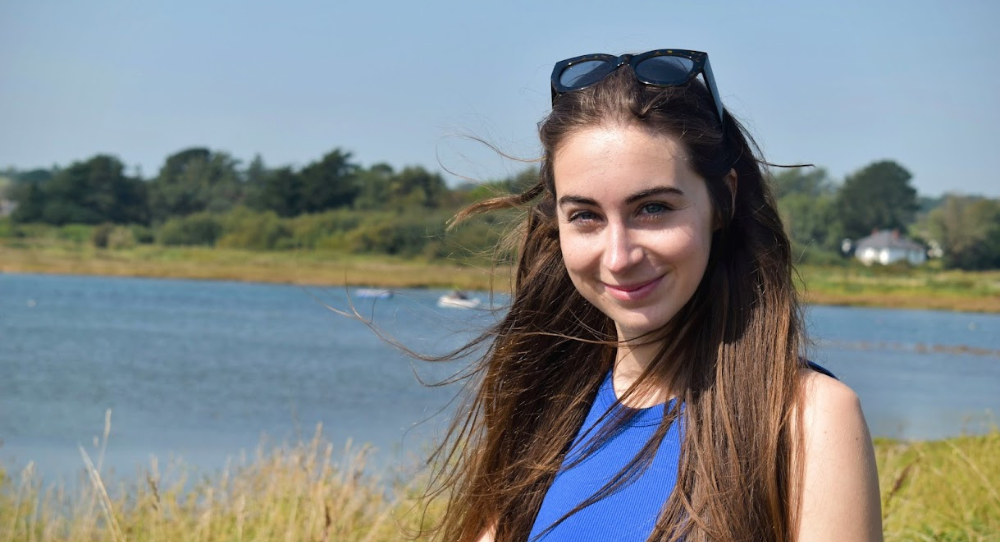
Bethany Handley is an award‑winning writer, poet, and disability activist from South Wales. Her work explores access to nature, ableism, and the landscapes that shape her — weaving creativity with activism. She is the author of My Body is a Meadow: Finding Freedom in the Outdoors (Headline, 2026), Cling Film (Seren, 2025), and co‑editor of Beyond / Tu Hwnt (Lucent Dreaming, 2025), the first bilingual anthology of Welsh Deaf and Disabled writers.
Alongside her literary work, Bethany advises organisations and landowners on making the outdoors more accessible. She is also an ambassador for the Wales Coast Path, Ramblers Cymru, and Country Living’s Access for All campaign, championing equality in nature.
A Shift in Perspective
Bethany wrote as a child, but began writing poetry when she became chronically ill as a teenager. Before joining writer development programmes, she says she “would never have dared to call myself a writer, particularly before taking part in the (Re)Writing Wales and Representing Wales programmes.”
“As a Disabled young woman, I hadn’t seen anyone with a body like mine in publishing, nor had I read many stories that reflected my experiences. Writing felt like a private hobby rather than something I could pursue professionally.”
Taking part in these programmes gave her “permission to take my writing more seriously,” helping her find community, understand writing as a livelihood, and push herself beyond her comfort zone. “That shift in confidence and ambition was transformational.”
Facilitating Her First Project
While studying at Cardiff University, Bethany was encouraged by lecturers to apply for a commission to run creative writing workshops. Alongside Megan Angharad Hunter, she applied for one of Literature Wales’ Writer Commissions, offered alongside Natural Resources Wales. They developed what became Write Back / Grym Geiriau.
They worked with 18–25‑year‑old writers who identified as Deaf, Disabled, and/or chronically ill. The project culminated in a two‑day trilingual retreat at Tŷ Newydd, where participants explored their relationships with nature and their bodies through writing, yoga, meditation, and discussion.
“At that point, I had never facilitated creative writing workshops. Literature Wales trusted us and supported us throughout. The commission gave me the skills and confidence to lead workshops, introduced me to remarkable writers, and highlighted the importance of amplifying Welsh Deaf and Disabled voices.”
“Five years later, writing and workshop facilitation is my job, and my debut non-fiction book will be published this May.”
As an undergraduate, Bethany loved writing but “had no sense that it could become a career.” She didn’t know other writers and couldn’t imagine herself in that world. “Literature Wales expanded my horizons and made the publishing world feel accessible rather than intimidating. I didn’t know anyone who wrote as their job; it felt so unattainable, I didn’t dare to dream it would be possible for me. Without their support, I would not be an author today.”
Development Programmes
Bethany was later selected for Representing Wales 2023–2024, Literature Wales’ flagship development programme.
“The programme demystified the publishing industry, from working with agents to understanding contracts, and helped equip me with the skills to facilitate workshops for both children and adults. I met many inspiring writers and industry figures, but a particular highlight was meeting Eloise Williams, who helped me confront my imposter syndrome and approach my writing with greater kindness.”
She was paired with poet Kim Moore as her mentor, whose “generosity, insight, and encouragement were invaluable.” She finished the programme with lasting friendships, an agent, and publishing deals for both Cling Film and My Body is a Meadow. She also grew in confidence as a performer, reading at festivals across the country.
During the programme, Bethany developed a life‑changing illness and became paralysed. “The support I received from Literature Wales staff and fellow writers was extraordinary. The scheme gave me guidance, hope and a purpose at a time I’d never needed it more. What should have been the hardest period of my life became one of the most positive and transformative.”
Bethany also joined Reinventing the Protagonist, led by Kaite O’Reilly. “Being in a space where I was not the only Disabled writer was profoundly liberating. Kaite, Disability Arts Cymru and Literature Wales created such a safe, open space to share ideas. The course encouraged boldness, experimentation, and subversion, and reminded me of the importance of holding safe spaces for our community. That ethos has shaped how I work.”
Little Ripples
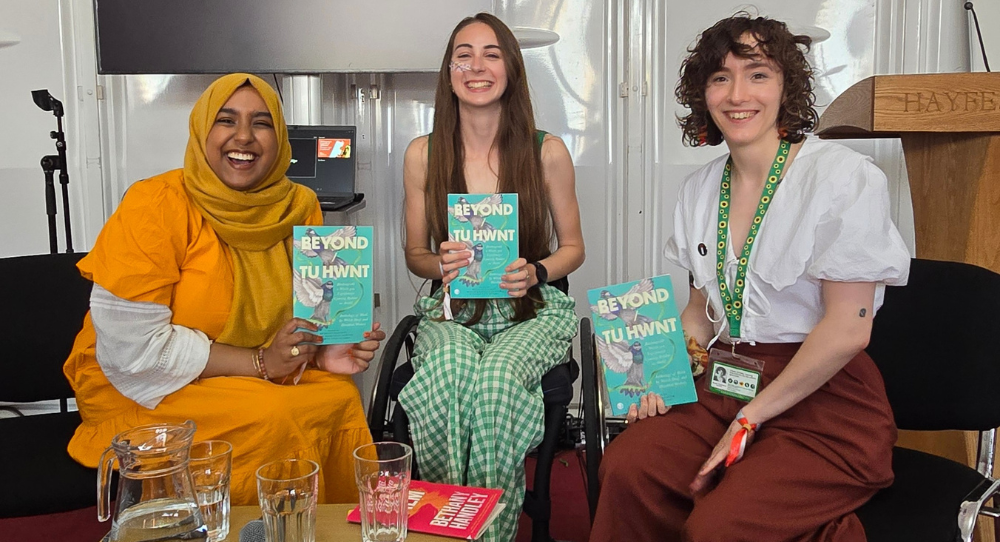
Through Representing Wales, Bethany met the writer Erin Sioned Hughes. Alongside Megan Angharad Hunter, they co‑edited Beyond / Tu Hwnt, a bilingual anthology of Welsh Deaf and Disabled writers.
“I’ve now found our anthology – our radical, beautiful celebration of diverse contemporary Welsh Deaf and Disabled writers – in bookshops across Wales but also in the National Theatre bookshop and other bookshops in London! It was such an exciting moment to see our Welsh Deaf and Disabled voices out in the world, especially at a time when Disabled voices are being silenced.”
Bethany also formed deep personal connections through Literature Wales programmes. “They also introduced me to some of my best mates. The network has been invaluable for writing and emotional support and giving me people to share drafts with or bounce ideas off.” She met Becca Wilson during the (Re)Writing Wales course, “and she moved in with me and my needy cat at the end of the week!”
(Re)Writing Wales, led by Darren Chetty and Iestyn Tyne, fundamentally changed her writing. The piece she wrote during the course was later published by The Welsh Agenda, leading to appearances on BBC Radio Wales and BBC Radio 4, and work with Country Living. It became the foundation for her debut non‑fiction book.
Staying at the accessible Tŷ Newydd writing centre was also transformative: “It showed me I could still live an independent, full life.”
Final Remarks
“The biggest gifts Literature Wales have given me are confidence and a diverse, nurturing network. I’m now a confident facilitator, running workshops with all age groups. I wouldn’t have been comfortable running the workshops without their training and advice. Also, before receiving support from Literature Wales, I only wrote poetry, now I write poetry, non-fiction and fiction.”
“The staff at Literature Wales are exceptional… In an industry that can feel hostile to writers from marginalised communities, especially those living in rural areas, Literature Wales offers sustained support rather than one‑off opportunities.
They don’t just open the door — they make sure the support continues long after you’ve stepped through it. Without their support, my life and my work would look very different.”